

Current Location:Home | News | Tarim University丨Hu Yang’s Spirit Passed on
Tarim University丨Hu Yang’s Spirit Passed on
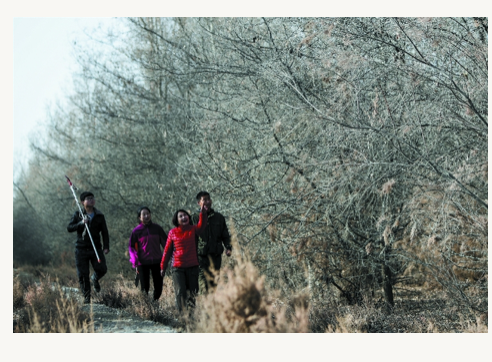
On December 14, Professor Li Zhijun (second from right) of the School of Life Sciences of Tarim University took students to check the growth of Populus euphratica in the experimental forest near the school. Some people say that there is always a smell of earth, sheep dung, and cow dung in the body of the masters of the tower. This is precisely the highest praise from the masses.
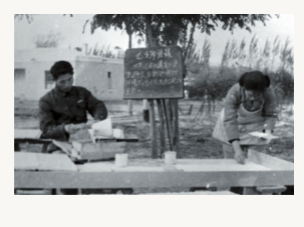
In the early days of the establishment of the university, the faculty and staff made chalk and other teaching aids (data map).
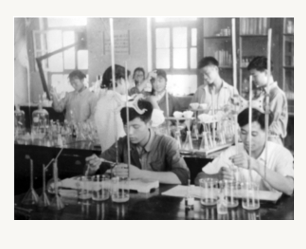
In 1965, University of Tajikistan students were taking a chemical experiment class (data map).

In the early days of the university, the fields were classrooms for students to practice internships (data map).
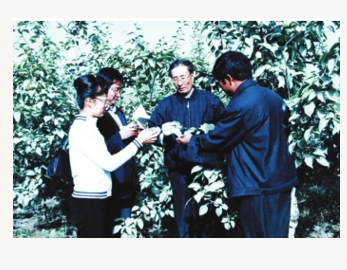
On December 9, 2003, Professor Yan Chunyu (second from right) of the University of Tajikistan’s Department of Landscape Architecture gave an on-site teaching in the orchard (expansion piece).
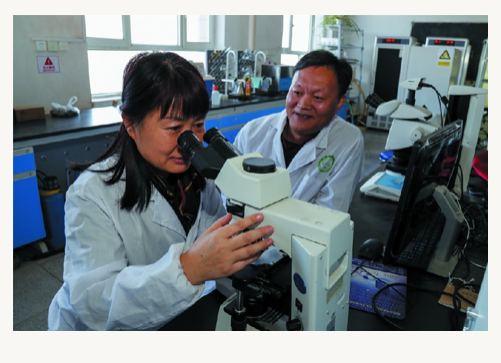
On December 14, Wang Lan (left) and Feng Hongzu checked the results of the experiment. Both of them are professors of the School of Plant Science of Tarim University. They have trained nearly 50 master and doctoral students in their 26 years of teaching.
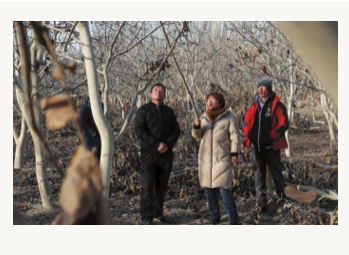
On December 15th, Professor Zhang Rui (middle) of the School of Plant Sciences of Tarim University was instructing the staff of the delegation to learn walnut pruning techniques. Every year, “hundred experts and thousands of students” from the school’s 6 science and technology commissioner demonstration bases walk into the fields to promote the transformation of scientific and technological achievements.
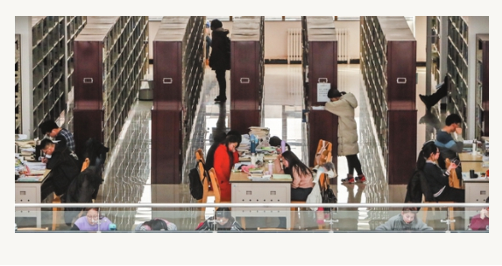
The teachers and students of Tarim University study in the newly opened library this year.
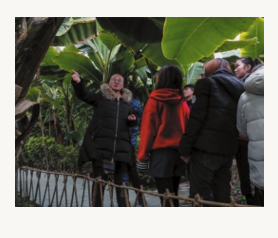
On December 16, Qi Hualing, who graduated from the School of Plant Science of Tarim University in 2012 at the Impression Lanpo Bay Ecological Sightseeing Park in Alar City, explained the knowledge of plant growth to tourists.

On December 15, Yang Shunbang, a 2011 graduate of the College of Animal Science, Tarim University, was checking the quality of cattle feed at the Demonstration Base of Desert Black Cattle Breeding in Alar City.
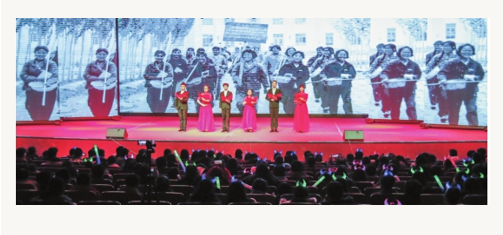
On December 14, students from the School of Animal Science of Tarim University were performing poems recite “Populus euphratica in Jiazi Academy”. On the same day, the college held a literary evening with the theme of “Popular euphratica, cultivating pillars, dedicating youth and building frontiers”.
“Talimu River, ah, the river of my hometown, how many times you have flown in your dreams, no matter where I am, I have to confide to you the song in my heart…” The classic old song “Talimu River” has been sung for decades. The world knows the Tarim River.
On the banks of the Tarim River, there is also a school that is famous for inheriting the spirit of Populus euphratica-Tarim University. This year, it ushered in a well-known school.
When the school was founded in 1958, Tarim University had only 19 teachers and more than 500 students, with poor natural conditions and lack of material conditions.
If you don’t have a school building, you can build it yourself; if you don’t have food, you can grow your own; you don’t have teaching aids, you can do it yourself. The teachers and students live in the nest, sleep on the red willow bed, the blackboard is hung on the tree trunk, and the handouts are on the lap.
Sixty years later, a modern comprehensive university stands on the banks of the Tarim River, facing the Populus euphratica forest that grows by the river. Compared with Populus euphratica for a thousand years, Tarim University is like a teenager, full of vitality and full of youthful vitality.
At the beginning of December 2018, the city of Alar, where the Tarim University is located, was sunny. Entering a clean and tidy campus, with a modern library and gymnasium standing on the campus, today’s Tarim University is no longer what it used to be.
Retired professor Yan Chunyu has worked and lived in Tarim University for nearly 60 years. He has cultivated countless students, and most of them stay in Xinjiang to work, just like an old Populus euphratica, letting the rain beat the wind and creating a forest of Populus euphratica. “My “old tree” took root, and the “small trees” that I brought with it became shaded. It was a piece of cake and it was not in vain.” Professor Yan Chunyu sighed with relief.
Huang Qiao, a second-year law student, has been studying at school for more than six years and has fallen in love with this hot land of southern Xinjiang: “I am willing to stay in southern Xinjiang and go to the place where the grassroots need it most, to dedicate my youth and to realize my own life. value.”
“The seeds of Populus euphratica are very small, but they have extremely tenacious vitality. If they fall on a dry ground, they will wait patiently for the rain to water; if they fall on a damp place, they can take root and sprout. “Princess” Professor Li Zhijun often uses this sentence as the opening remarks, “We Ta master students are not a seed of Populus euphratica, but we have more tenacious vitality, and southern Xinjiang is a broad stage for the masters and students to display their talents.”
Zhao Guanghui, secretary of the Party Committee of Tarim University, believes that no matter how far a person goes, he must not forget his roots. This “base” is the original intention of serving southern Xinjiang and serving the Corps’s undertakings of reclaiming and defending the border. Yang Shunbang, who graduated in 2011, and Qi Hualing, who graduated in 2012, set up a family and started a career in the local area. Like the thousands of students who graduated from Tarim University and stayed in Xinjiang, they practiced “get down, keep, use, and do well” with practical actions. This sentence contributes wisdom and talents to Xingjiang Gubian…
Although Tada University is far away from the bustling city, it is very close to the countryside and the people of all ethnic groups. In 60 years, of more than 60,000 outstanding graduates, 85% stayed in Xinjiang, 68.5% took root in southern Xinjiang, and 52% of inland students stayed in Xinjiang to work.
“Tianshan makes pens and snow for tea, the spirit of the Corps spreads to the world, Kunlun erects a monument to write the school history, guards the border to educate people and enjoys the end of the world, pays fire to pass on forever staying in Fanghua…” Looking up at the statue of General Wang Zhen, the school song “Glory Tower” “Big” echoes, this is the vivid footnote of the Populus euphratica spirit of “hard work, continuous self-improvement, rooting in the frontier, and willingness to make dedication” practiced by generations of students.